Yaupon is Ilex vomitoria, an evergreen shrub or small tree in the holly family. It grows naturally across much of the southeastern United States, including Texas.
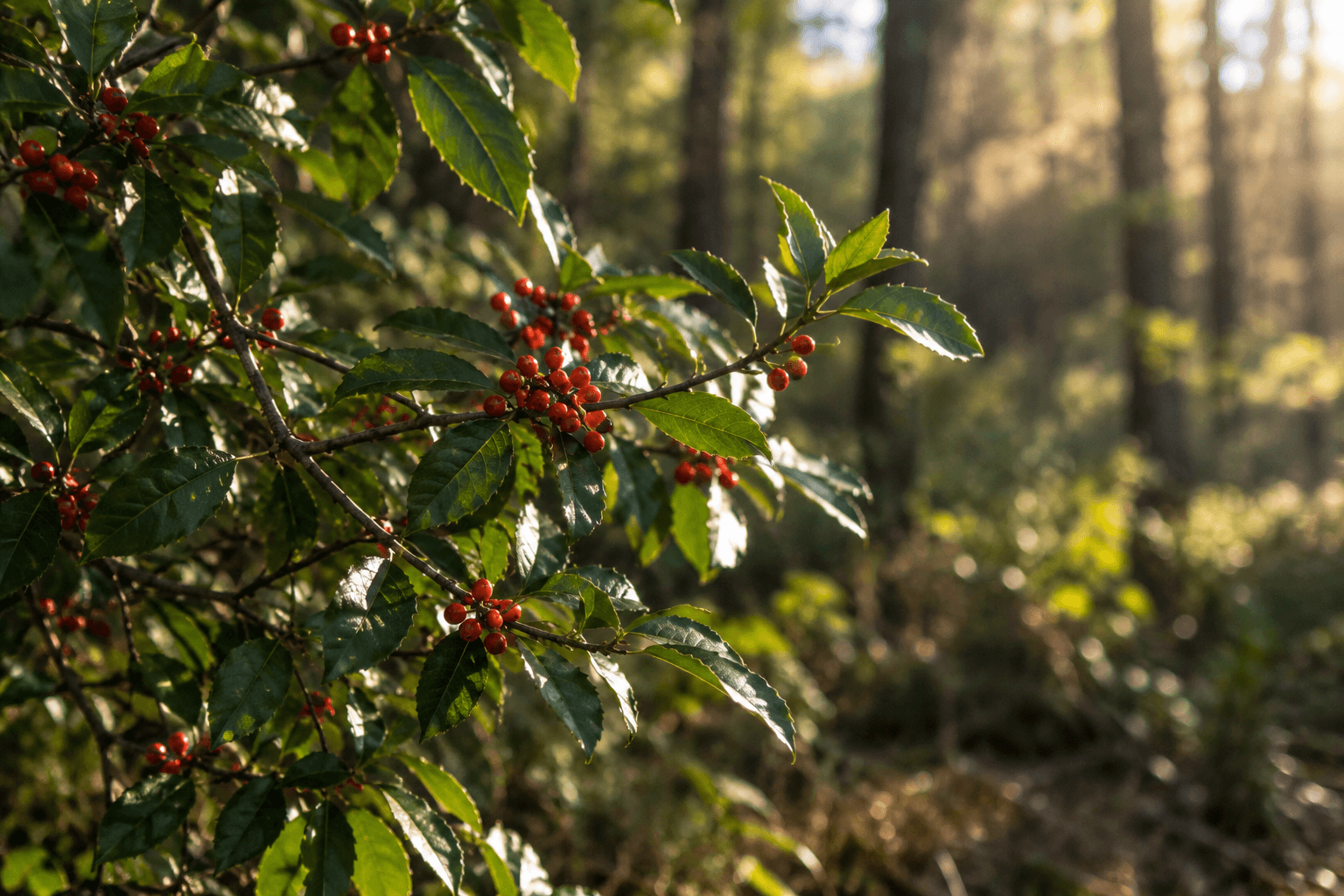
A plant native to the Southeast
Yaupon has small, glossy, alternate leaves and small flowers. Female plants produce red, berry-like fruit when pollinated by a male plant. It can grow as a dense shrub or a small multi-stemmed tree. In Texas, it is common in parts of East Texas and extends south toward the coast and west toward the edge of the Edwards Plateau.
Its leaves naturally contain caffeine. That makes yaupon unusual among plants native to North America—and gives the leaf a place in the story of caffeinated beverages on this continent.
A history that deserves care
Indigenous peoples across the Southeast have a long history of preparing yaupon as a beverage. Historical accounts describe its use in social, ceremonial, and diplomatic contexts. Different nations have their own names, traditions, and relationships with the plant; those histories should not be flattened into a single generic story or used as a marketing prop.
European colonists later used the name “black drink” for some preparations. The plant’s scientific name, Ilex vomitoria, reflects historical European interpretations of certain ceremonial practices. The name should not be treated as evidence that ordinary yaupon leaf infusion is inherently emetic or unsafe; nor should a brand make medical or safety claims without appropriate evidence.
What we mean when we say roasted yaupon
TEXAS YAPA is developing a beverage made from the dried leaves of yaupon that we roast ourselves. It is not coffee, and it is not Camellia sinensis tea. We want to describe it clearly as roasted yaupon and let the plant stand on its own.
We are still learning about the best raw-material specifications, roast profiles, cut size, and brewing methods. We will publish practical details only after testing supports them.
Botanical details are summarized from Texas A&M Forest Service and Texas A&M AgriLife. Historical context is informed by the Florida Department of State’s foodways resource. See Sources & further reading.